
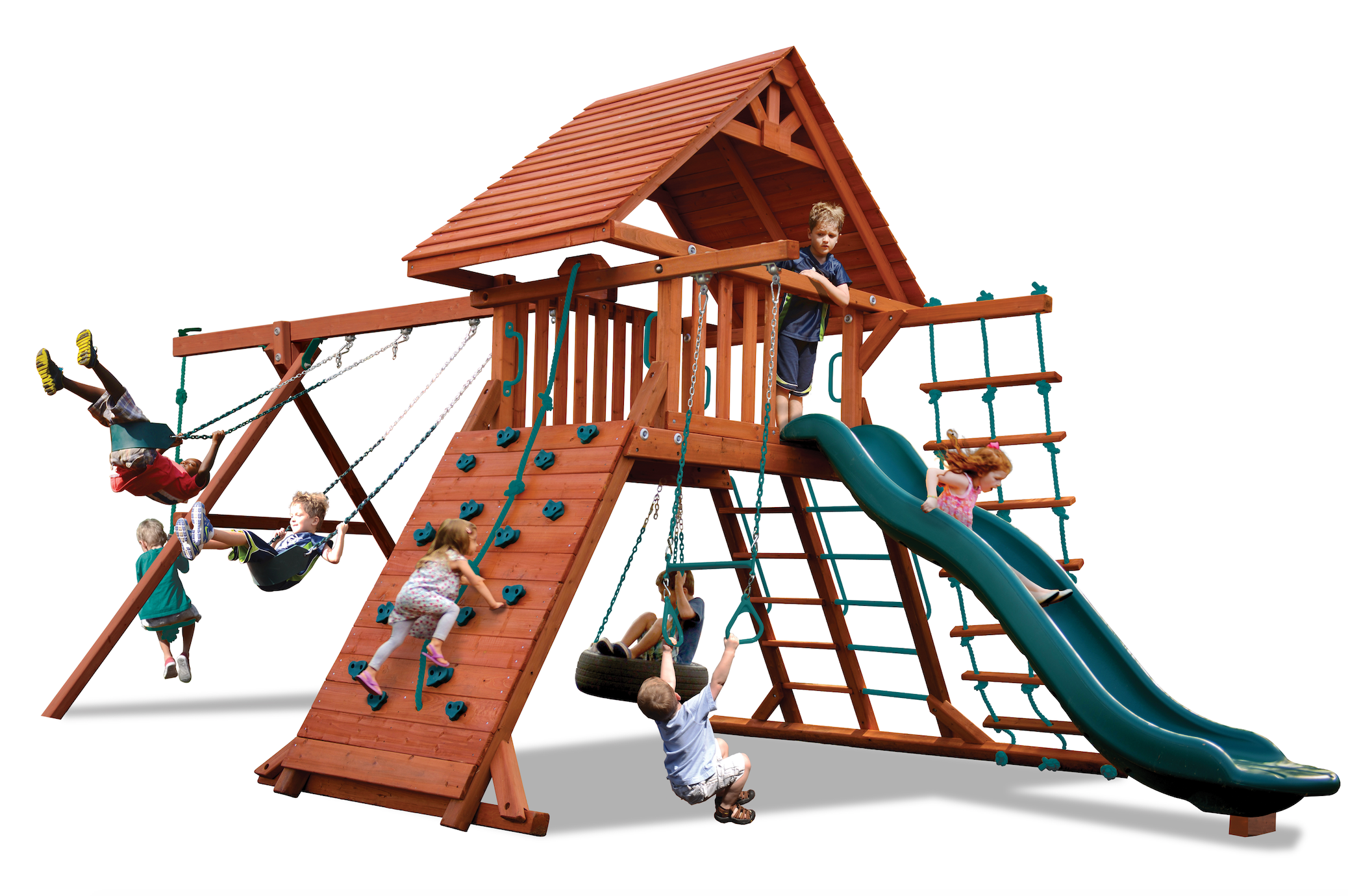
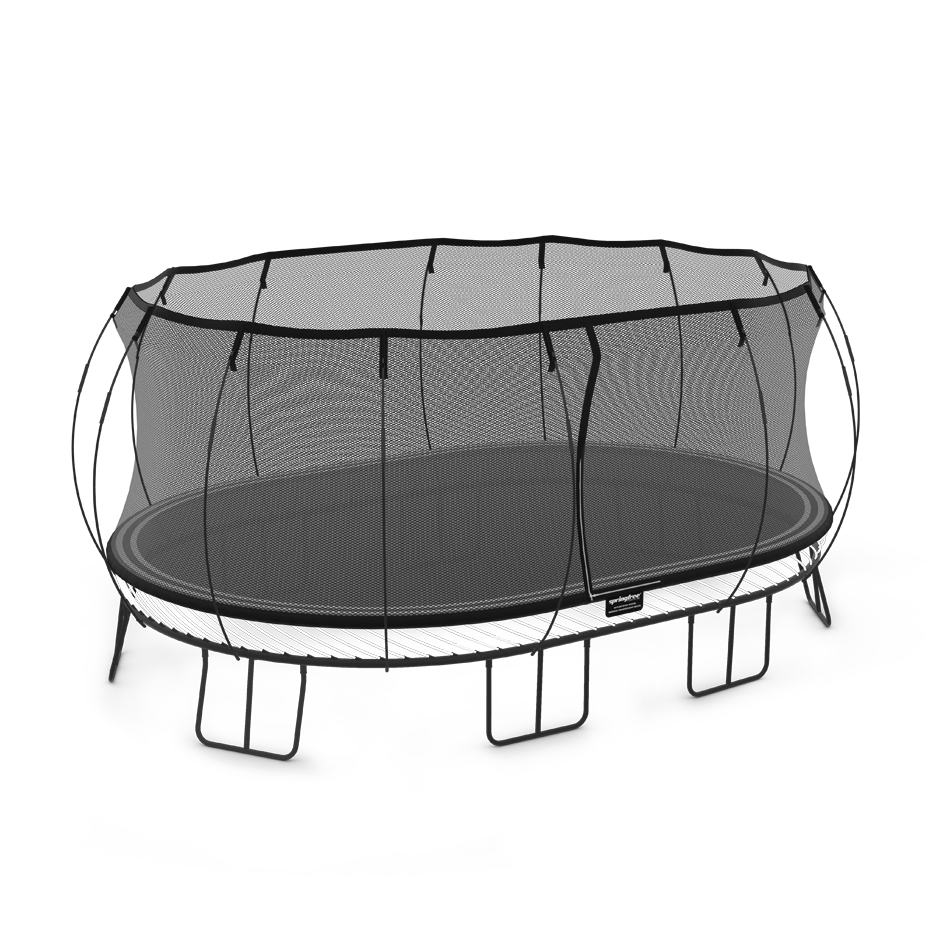





You picked out the perfect swing set, the kids are counting down the days, and the only thing left is figuring out what goes underneath. That last step gets skipped more than it should. The ground cover under your playset is the part that catches every fall, every jump, and every wild landing, so picking the right one matters as much as picking the playset itself.
This guide walks through the most popular playset ground cover options, what the CPSC says about fall zones, how deep to fill, and which choice fits your yard best.
Key Takeaways
- Falls to the surface are the leading cause of playground injuries, so your ground cover is a safety decision, not a finishing touch.
- Rubber mulch gives the best shock absorption per inch and lasts 10 or more years with very low maintenance.
- The CPSC says fall zones should extend at least 6 feet around play equipment, with extra space for swings.
- Loose fill needs a recommended depth of at least 9 inches once compressed to meet safety standards.
- The best playsets for backyard use deserve a matching surface that holds up to active play year after year.
Why the Ground Under Your Playset Matters
Your ground cover is the first thing that catches a fall, so it does a lot more than fill space. The U.S. Consumer Product Safety Commission (CPSC) reports that falls to the surface are the leading cause of playground injuries, which is why a soft surface under the play structure is the top priority for any backyard setup.
A quality playset ground cover does two big things for your family. It cushions falls and greatly reduces the chance of serious injury, and it creates a stable base around the play equipment that helps prevent weed growth.
The right surface also keeps the area cleaner, helps with good drainage after rain, and makes the whole space feel finished. Pair that with one of the backyard playsets for kids we carry, and you have a setup that holds up to years of active fun.
What Is a Fall Zone, and How Big Should It Be?
A fall zone is the space under and around play equipment where a child might land if they slip or jump. This area needs an approved surfacing material and should stay clear of toys, edging, or other equipment that could cause injury.
Here are the basic fall zone requirements to follow.
- General climbing equipment and rock wall features: Extend the fall zone at least 6 feet in all directions from the outer edge of the equipment.
- Swings: Extend the fall zone at least 6 feet to each side, then twice the height of the swing beam in front and behind.
If you want a wider overview of safety habits to pair with your fall zone, our backyard playground safety guide walks through equipment spacing, layout, and supervision tips.
6 Ground Cover Options for a Backyard Playset
There are several excellent options for surfacing material, and each one has its own set of strengths. Some give you an exceptional playground protection surface that lasts for years, while others trade durability for a lower price tag. Here is a closer look at the six most common picks for a backyard swing set or playground.
Rubber Mulch
Rubber mulch is made from shredded tires that have been processed and cleaned into small rubber mulch nuggets. It is widely viewed as the strongest performer for backyard playground surfacing because it gives unmatched shock absorbency per inch.
- Safety: Tested and certified to ASTM F1292 and ASTM F3012 standards, so you know the shock absorption holds up.
- Cost: Higher upfront, but the very cost effective option over time since it does not break down.
- Maintenance: Low maintenance and stays in place. It does not rot, grow mold, or attract termites, earwigs, or rodents.
- Weather: Drains water rapidly, dries fast, and does not freeze or pack down in winter.
- Cons: The dark color absorbs heat, so the surface can get hot on sunny summer days.
- Best for: Families who want minimal maintenance and the best long-term safety.
Not all rubber mulch is the same. The soft landing rubber mulch (shredded version) is made from truck tire retreads instead of whole tires, which makes it softer underfoot and nearly steel-free.
Wood Mulch and Engineered Wood Fiber
Wood mulch and wood chips are the natural-look choice that fits most yards. Engineered wood fiber (EWF) is the playground-grade version, processed to interlock into a soft, springy surface that gives good cushioning.
- Safety: EWF is ADA compliant, so it works for kids of all abilities.
- Cost: One of the most affordable loose fill options.
- Maintenance: Needs raking and a top-up every year or two as the material breaks down.
- Cons: Breaks down over time, attracts bugs and mold, and can leave splinters.
- Best for: Families who want a natural look on a smaller budget.
Pea Gravel
Pea gravel uses small rounded stones to create a deep, loose fill surface that drains well. You may remember it from public parks years ago.
- Safety: Adequate shock absorption at proper depth, but the small stones are a choking hazard for toddlers.
- Cost: One of the cheapest loose fill materials.
- Maintenance: Scatters easily and needs regular raking.
- Cons: Not safe for kids under 4, and the stones can hurt when kids fall on them at full force.
- Best for: Yards with older kids who are past the put-it-in-the-mouth stage.
Sand
Sand turns the area under your playset into a giant sandbox, which kids love for creative play. It also gives adequate shock absorption when you keep it deep enough.
- Safety: Decent cushioning at depth, but it compacts when wet and hides debris.
- Cost: Affordable and easy to find.
- Maintenance: Needs regular raking and inspection, and tracks into the house.
- Cons: Attracts neighborhood cats and bugs, and the cushioning drops fast when the sand packs down.
- Best for: Smaller play areas where doubling as a sandbox makes sense.
Rubber Tiles and Poured-in-Place Rubber
Rubber tiles and poured-in-place rubber are unitary surfaces, not loose fill. They give a clean, finished look and rate to specific fall heights.
- Safety: Strong, consistent shock absorption with no displacement issues.
- Cost: The most expensive option upfront.
- Maintenance: Almost none. Sweep or rinse to keep it clean.
- Cons: Repairs are tough since damaged tiles or sections often need a full replacement.
- Best for: Families who want a polished look with the lowest upkeep.
Poured-in-place rubber is not a DIY job. The surface has to be mixed and cured correctly, which is where professional playset installation makes a real difference.
Artificial Turf with Safety Padding
Artificial turf gives you the look of a green lawn without the mowing. For playground use, it needs a shock pad underneath that meets safety standards.
- Safety: Meets ASTM F1292 when paired with the right padding.
- Cost: High, especially with professional installation.
- Maintenance: Low, though it can heat up on sunny days.
- Cons: The infill can hold heat and odors, and the turf needs proper drainage underneath or water will pool.
- Best for: Families who want a year-round green look without lawn care.
Rubber vs Wood Mulch: A Quick Side-by-Side
Most parents end up comparing rubber and wood as their final two picks, so here is the side-by-side cost comparison and performance check.
|
Factor |
Rubber Mulch |
Wood Mulch |
|
Lifespan |
10 or more years |
1 to 2 years before top-up |
|
Shock absorption (6 inches) |
Up to 12 ft fall height |
About 6 ft fall height |
|
Maintenance |
Minimal maintenance |
Rake and refill yearly |
|
Pests and mold |
Does not attract either |
Can attract bugs and mold |
|
Winter performance |
Does not freeze or harden |
Can clump in cold and wet |
|
Upfront cost |
Higher |
Lower |
The rubber mulch saves you money in the long run because you skip the yearly replacement. If you want a deeper read on the wood side of the choice, our guide to wood chips vs playground mulch covers how each one wears over time.
How Deep Should Your Ground Cover Be?
CPSC surfacing guidelines tie depth to the fall height of your equipment. A deeper bed of loose fill gives more shock absorption, but only up to the point listed in the chart below. The American Academy of Pediatrics on playground safety also recommends at least 12 inches of loose-fill material under play equipment, extending 6 feet in all directions.
|
Material |
6 in Depth |
9 in Depth |
12 in Depth |
|
Shredded Rubber Mulch |
10 to 12 ft fall height |
Not needed |
Not needed |
|
Wood Chips |
6 ft |
7 ft |
12 ft |
|
Engineered Wood Fiber |
6 ft |
7 ft |
12 ft |
|
Fine Sand |
5 ft |
5 ft |
9 ft |
|
Fine Gravel |
6 ft |
7 ft |
10 ft |
Rubber loose fill does not compress the way wood or sand does, so 6 inches is the standard recommendation. The protection at that depth already matches or beats what other materials offer at their maximum depth.
Keep in mind that loose fill compresses about 25% over time, so start with 12 inches if you want to maintain a 9-inch bed long term. Asphalt, concrete, packed dirt, and grass do not count as safety surfacing, no matter how soft they look. Refill and rake under swings and at the bottom of slides where the material moves around most.
Matching Ground Cover to Your Playset's Deck Height

The right depth depends on how tall your playset deck sits off the ground. Use this quick reference to match your setup.
- Deck height up to 5 feet: 6 inches of rubber mulch or 9 inches of engineered wood fiber.
- Deck height 5.5 to 6.5 feet: 6 inches of rubber mulch or 12 inches of engineered wood fiber.
- Deck height 7 to 7.5 feet: 6 inches of rubber mulch, rubber tiles, or poured-in-place rubber.
Wooden swing sets with taller decks get the most out of a rubber surface because the higher fall potential needs more cushioning per inch.
How to Install Ground Cover Under Your Playset
Proper installation is what makes the safety numbers actually work. Skip a step and you lose the shock absorption you paid for. Here is the order to follow.
- Mark the fall zone. Measure 6 feet out from every edge of the play structure. Add extra space in front and behind swings.
- Excavate the area. Dig down 6 to 12 inches and level the ground for a stable base.
- Install a border. Use curbendables rubber borders to hold the loose fill in place. They bend to any shape and stay soft enough that kids will not get hurt running into the edge.
- Add a weed barrier. Lay weed barrier fabric to prevent weeds from growing up through the surface.
- Fill and level. Add your material to the recommended depth, rake it even, and plan for compression by overfilling a couple of inches.
A few extra tips will save you headaches later. Use ground stakes or anchor kits to secure the border edging so it stays put through wind and active play. Plan for good drainage so water moves away from the play area, and walk the surface once a month to spot thin spots and refill before they turn into safety issues.
Build a Safer Backyard Play Space
Picking the right playset ground cover comes down to your budget, your kids' ages, and how much maintenance you want to handle. Rubber mulch wins on safety and longevity, engineered wood fiber wins on price for the natural look, and unitary surfaces like rubber tiles win when you want a clean, low-effort finish.
Whichever one fits your yard best, the goal is the same. Give your kids a safer play area so they can swing higher, climb the rock wall, and enjoy years of backyard adventures without you holding your breath every time they jump.
We carry the playsets, the rubber mulch, the borders, and the installation services to put it all together for your family. Order online or visit our Recreations Outlet Ohio showrooms in Powell at 484 W Olentangy St or Milford at 885 Ohio 28 Business, and our team will help you build the safer backyard play space your kids deserve.
