



Good indoor playgrounds for toddlers give little kids room to crawl, climb, and explore at their own speed. For kids ages 1–4, look for low equipment, protective flooring, and a separate play area away from older children. Clear sight lines make parent supervision easier.
Need indoor fun on a rainy Ohio day? See our indoor playgrounds in Milford and Powell, near Cincinnati and Columbus, and compare play passes. Ask about age rules before visiting.
What to Look for in Indoor Playgrounds for Toddlers
The best indoor play spaces for toddlers aren't always the biggest. A toddler indoor playground should offer activities your child can use without help getting onto tall structures.
Separating Little Kids From Older Kids
A two-year-old in a tunnel moves differently from a six-year-old racing down a slide. A separate area can keep their paths from crossing. Otherwise, look for low play features away from the main climbing routes.
Small slides, crawl spaces, and ground-level panels are good starting points. Climbing walls and multi-level play structures may be better for older kids.
The CPSC's Public Playground Safety Handbook recommends separating equipment by age. Its public-playground guidance doesn't cover every indoor soft-play center.
Protective Flooring and Indoor Play Space Layout
Watch where children land after sliding or climbing. Impact-absorbing flooring can reduce the severity of a fall. Not every soft-looking mat is rated for that job.

Stand near the entrance and scan the room. Can you see the steps, tunnels, and slide exits? If not, follow your toddler instead of watching from a seat.
An enclosed space with a controlled entrance is helpful for kids who wander. A gate doesn't replace watching your child.
Active Play, Sensory Activities, and Imaginative Play
Toddlers may spend ages in one tunnel. Others would rather stack blocks, turn a play panel, or pretend to cook lunch.

Balance beams are better suited to older children; toddlers can use crawl tunnels and ground-level play panels instead. Blocks and puzzles are good for slower moments. The American Academy of Pediatrics' toy-buying guide explains how everyday toys support learning and fine-motor skills.
A pretend kitchen, playhouse, or train table gives them room for imaginative play. Some centers also have a dress-up area, educational toys, or ride-on toys. Check the age guidance, especially if older children share the space.
Colors, textures, and shapes give toddlers something to explore through hands-on sensory play. If there's a ball pit, check who uses it and whether it suits your child's age.
Clean Equipment and Rules That Are Easy to Find
Check shared toys for dirt, torn padding, and worn surfaces. Ask how often equipment is cleaned, where children can wash their hands, and whether socks are required.
Clear age rules matter more than a long list of attractions. Ask whether there's a quiet corner if your child needs a break from the noise.
What Is the Best Age for an Indoor Playground?
Around 12 to 18 months is a common time to try age-appropriate indoor playground activities, once a child is walking steadily. The CPSC describes toddler playground equipment for ages 6–23 months and preschool equipment for ages 2–5. Those groups describe equipment, not the age rules of a particular venue.
The CDC lists walking without support as an 18-month milestone. Babies who aren't walking may still enjoy supervised floor-level sensory play where it's allowed.
|
Age |
Play to look for |
|
Around 1 year |
Floor-level play, sturdy sensory panels, and space to crawl |
|
2 years |
Short tunnels, low slides, and pretend play |
|
3 years |
Small climbers, playhouses, and easy balancing games |
|
4 years |
More varied age-rated slides and climbing routes |
Go by ability, not age alone. If they need to be lifted onto a platform, it may be too much for them right now.
Are Indoor Playgrounds Safe for Toddlers?
Generally yes, when the equipment suits your child's age and an adult stays close. Falls can still happen, especially near bigger kids.
The AAP's playground safety guidance recommends age-matched equipment and active supervision. Our indoor activities for kids guide has ideas for keeping kids busy at home. At a play center, check the equipment before your child gets started.
Before your toddler starts, take a quick look for:
- Posted age limits and clear slide exits
- Loose hardware, sharp or unrounded edges, or torn padding
- Bigger kids running across a toddler's path
- Drawstrings or loose clothing that might catch
If children crowd a slide's landing area, try another activity.
Are Playhouses With Slides Safe for Toddlers?
Yes, if the playhouse and slide are made for your child's age. Check for low steps, handholds, and a clear landing area.
Let your child slide feet first, one at a time. Don't go down with them on your lap. A toddler's foot can catch against the slide and injure their leg.
Are Bounce Houses Safer Than Trampolines for Toddlers?
Not necessarily. Both involve fall and collision risks, especially when bigger kids are present.
The AAP's trampoline guidance advises against trampoline jumping for children under six. Choose low climbing or floor-level games for toddlers instead.
Indoor Playground Options Near Cincinnati and Columbus
Our Milford and Powell locations have full-size playsets with slides and tunnels, plus basketball hoops and trampolines. Not every attraction suits toddlers, so ask which ones are age-appropriate.
Milford: An Indoor Playground Cincinnati Families Can Visit
Looking for an indoor playground near Cincinnati? Our Milford location is on the city's east side at 885 Ohio 28 Business, Milford, OH 45150.

Milford has tunnels, slides, and larger climbing structures. Ask which activities fit your child's age before open play.
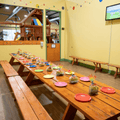
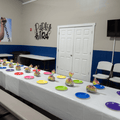
Milford also has party rooms. For a birthday party, see our party booking page.
Powell Indoor Playground Near Columbus
Our Powell location is at 484 W. Olentangy St., Powell, OH 43065, near Columbus. It also has playsets, slides, tunnels, and basketball hoops.
A short turn on a suitable slide or tunnel may be plenty for a younger child. Powell also has a party room.
Open Play Rules and Pass Details
We haven't confirmed a dedicated toddler area or toddler-height basketball hoop at either location. Ask our team about age rules and equipment before visiting.
Socks are required in the play zones. Single-visit passes and memberships are available; check current pass details and hours before leaving home.
What to Pack for an Indoor Playground Visit
Bring socks and a spare pair, water, and a change of clothes. Add diapers or wipes if needed. Check where snacks are allowed.
Plan around naptime. A shorter visit may work better than trying to see the entire facility.
Indoor Activities for Toddlers on Rainy Days
Staying home? Try rolling a soft ball back and forth with your two-year-old. Make a crawl tunnel from a large cardboard box, or put tape on the floor for a line they can follow.
Set up a small arts and crafts area with chunky crayons and paper, or try large blocks and a pretend shop. Skip small pieces if your toddler still mouths toys. For more indoor fun, our sensory activities for toddlers guide has quieter play ideas.
Find Indoor Play That Fits Your Toddler
The right place has equipment your child can use without constant help. If you're near Cincinnati or Columbus, call our Milford or Powell team to check the current age guidance before visiting.


