






Choosing between a 13ft or 15ft trampoline often comes down to space, who’s jumping, and how the trampoline will be used day to day. Both sizes are popular options for backyard trampoline sizes, but they can feel very different once kids and adults start jumping.
This guide breaks down trampoline sizes in a practical way, focusing on jumping space, safety, and how each size works for growing families. The goal is to help you choose the right trampoline size for your yard and the way your family plans to use it over the long haul.
Quick Yard and Family Fit Checklist

A fast gut-check now saves second guessing after delivery.
Measure Your Space and Clearance
Grab a tape and map the footprint plus a safety buffer. For a 13ft round, many families plan a clear area of about 19–20 ft across, while a 15ft usually needs closer to 21–23 ft, depending on shape and placement.
Keep 3–5 ft of space around the trampoline for safe access and the safety enclosure, and look up for 20+ ft of overhead clearance with no branches, lights, or wires.
Planning space early is one of the most important factors when choosing the right size trampoline, especially if your yard has limited space or obstacles to work around.
Who Will Be Jumping Now and In Two Years
If your kids are 4–8 and mostly into casual jumping, a 13ft trampoline often feels roomy and easy to supervise. If you have older kids, multiple kids, or adults joining in, more jumping space helps reduce crowding and contact between jumpers.
Growing families often appreciate the added width and length of a 15ft or a larger square setup as skills improve and play becomes more active over time.
Safety Rules and Supervision Plan
Pick a size trampoline that matches how your family actually uses it. If you stick to one jumper at a time, a 13ft can work well for years, even as kids grow.
If weekends usually mean multiple kids and friends, more space gives you better control and a calmer bouncing experience. Clear rules, a closed safety net doorway, and skipping flips without training go a long way toward reducing most trampoline injuries.
13ft vs 15ft: What You Gain and Give Up
You’re comparing two large trampolines that may look close in size on paper but feel different once kids start jumping. The difference usually shows up in how much jumping space you get, how the bounce feels, and how well the trampoline handles shared use over time.
Jump Surface And Room To Share
Not all ft trampolines offer the same jumping surface. Many traditional 15ft rounds include springs and a safety pad inside the frame, which reduces the usable jumping mat area. With a spring-free, net-to-mat setup, a 13ft round can feel similar to some framed 15ft models, while a larger Springfree-style footprint provides more jumping space and extra room for multiple jumpers.
Families looking for more width and length often compare these setups alongside other jumbo trampoline sizes that prioritize shared play without crowding.
Bounce Feel, Control and Confidence
Bigger mats give jumpers more room to settle into a consistent bounce. On a 13ft, kids often feel quicker control, which works well for younger kids and casual jumping. A 15ft gives older kids more space to move without drifting into the enclosure net, supporting confidence during active play, light drills, or low impact cardio.
Weight Limits and Number of Users
Most backyard trampoline sizes list a single user weight along with a higher total load rating. Springfree models support high user weight limits (model dependent), but the safety takeaway stays the same: one jumper at a time lowers the risk of collisions, since most trampoline injuries involve shared jumping.
If your household often includes multiple kids, a 15ft or larger square setup offers more room and more stability, while a 13ft still works well with clear rules and supervision.
Shape Choices at These Sizes
Size is only half the story. Shape changes how the jumping surface feels, how you move on the mat, and how the space gets used during everyday play.
Round Trampoline: Centered Bounce and Casual Play

Round trampolines guide you toward the center, which helps younger kids stay balanced as they start jumping. A 13ft round works well if you’re planning casual jumping, while a 15ft round gives you more jumping space around the center so older kids and adults have room without brushing the enclosure net. If you want a closer look at how a round setup feels in real use, the 13-ft jumbo round trampoline is a good example of this centered bounce style.
Oval Trampoline: Balanced Flow With Extra Length

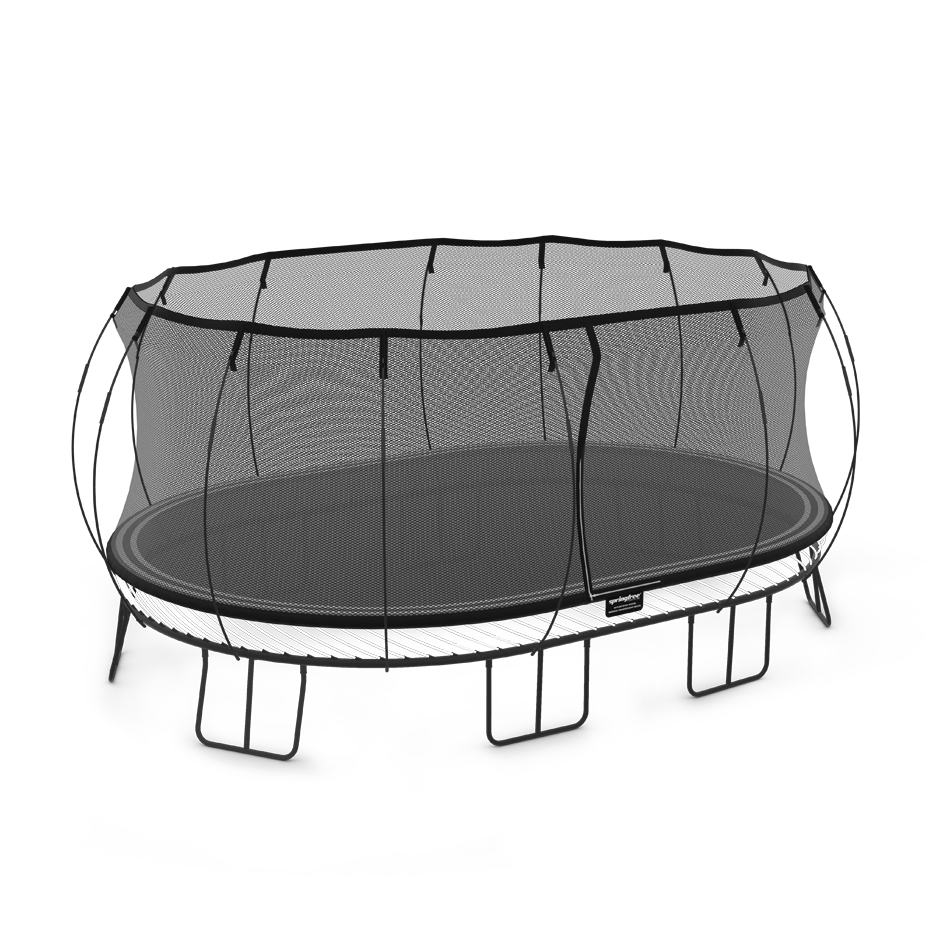
Oval trampolines give you a mix of centered bounce and added length, which works well if you want more room without jumping straight side to side. The shape spreads the jumping space out evenly, making it easier for multiple kids to jump without clustering in one spot. A layout like the 13-ft oval trampoline (8×13) shows how this shape creates a smoother flow while still fitting many backyard sizes.
If you’re deciding between 13ft vs 15ft but want a layout that feels longer in use, an oval can offer a smoother bouncing experience while still fitting many backyard trampoline sizes.
Square Trampoline: More Corners, More Space Per Foot

A square trampoline spreads the jumping mat into the corners, giving you more usable area per foot than a round. A 13x13 square feels roomy when you have multiple kids jumping, and it often provides more room than many 15ft trampoline frames that lose space to springs and a safety pad. If your yard is limited but you still want more room to move, the 13-ft jumbo square trampoline shows how a square layout makes better use of space.
Rectangular Trampoline: Performance and Track-Style Lanes

Rectangular trampolines give you a longer run, which works well if you like repetition, drills, or adding a basketball hoop at one end. A rectangle around 8x13 suits older kids who move in straight lines, and it can feel larger in use than a round 13ft trampoline. If you’re choosing based on how you move, comparing oval vs rectangular trampolines helps clarify how layout affects play.
Safety Features that Matter More on Bigger Trampolines
More size means more speed and longer travel across the jumping surface, so your safety setup matters even more. With larger trampoline sizes, features that reduce hard contact points and control movement around the edge help everyone safely jump with confidence.
Enclosures, Poles and Doorways
A good safety net should stay tight, tall, and hold its shape during active use. Curved or flexible poles reduce hard contact, while a self-closing doorway keeps kids from bouncing near an open gap. On a 15ft trampoline, that added perimeter makes a secure safety enclosure especially important.
Adding the right trampoline safety accessories can also support stability and everyday outdoor use, especially when multiple kids are jumping.
Net-To-Mat Design and Springless Protection
Exposed springs, a visible metal frame, and gaps along the edge create common pinch points. Springfree trampolines use a springless, net-to-mat design that removes springs and the safety pad, while positioning the trampoline frame below the jumping mat. This creates a larger safety buffer where jumpers land on net and mat instead of steel, which matters even more as jumping space increases.
Ground Clearance and Anchoring
Larger trampolines catch more wind and see more energetic play from kids and adults. Checking ground clearance helps with airflow, yard care, and long-term durability, while anchoring improves stability in gusty conditions. Using a ground anchor kit for trampolines is especially helpful if your yard isn’t perfectly flat or if the trampoline sits in an open area.
Setup, Placement and Upkeep
A little planning here pays you back for years of safer play and easier upkeep.
Site Prep, Overhead Clearance and Distance From Hardscapes
Choose a flat spot with grass or soft ground, and allow 3–5 ft of space around the trampoline frame for safe access. Keep the setup away from walls, patios, and play sets to avoid hard contact during active use. For both 13ft and 15ft trampoline sizes, maintain 20+ ft of open air above the jumping surface so jumpers have enough space overhead.
Assembly Time and Help Needed
Larger ft trampolines with taller nets take more time and usually need at least 2 adults for assembly. Springfree models use flexible rods instead of springs, along with a sturdy base, so following the build order helps everything line up correctly. A 13ft typically goes up faster, while a 15ft or large square adds height and parts, so plan extra time.
If you want help with placement and setup, professional trampoline installation can make things easier, especially with large trampolines. You can contact our Cincinnati installation team or our Columbus installation team to talk through setup options and scheduling.
Weather, Anchors and Maintenance
For year-round outdoor use, check anchors after storms and keep an eye on overall stability. Rinsing the jumping mat and enclosure net helps clear dust and pollen, which supports durability over the long haul. A galvanized steel frame resists corrosion, and Springfree’s hidden frame design keeps steel away from the jumping surface, helping protect the mat and support long term value.
Take The Next Step With the Right Trampoline Size
Choosing between a 13ft or 15ft trampoline comes down to space, how many jumpers you expect, and how you want it to feel over time. A 13ft works well when you want a compact footprint with room for family fun, while a 15ft or large square gives you more jumping space, added stability, and confidence as kids grow.
Once you’ve narrowed down the right trampoline size, you can see the available options at the Recreations Outlet store in Ohio or order online when it’s convenient. We offer delivery and professional installation across Ohio, Kentucky, and Indiana, so your setup is handled the right way from start to finish.