






One of the first choices that comes up when buying a trampoline is the shape you want in your backyard. The two most common options are round and rectangular, and each one changes how the trampoline feels, fits, and gets used during outdoor play.
That choice matters more than it seems at first. In a round vs rectangle trampoline comparison, the shape can affect bounce control, safety habits, and how happy your family is with the purchase long after the first few jumps. This guide walks through the key differences in a simple, practical way so you can choose the right trampoline for your yard, your kids, and how you actually plan to use it.
How Trampoline Shape Changes Bounce and Control
Shape sets the tone for how a trampoline feels under your feet. It also plays a role in how easy it is to stay centered, how high you go, and how controlled jumping feels during everyday outdoor play.
Round: Center-Pulling, Softer Bounce

Round trampolines spread spring tension evenly toward the middle of the jumping mat. That natural pull helps guide kids and other jumpers back to the center, which works well for casual jumping and mixed ages. You will usually feel the most lift in the middle, with a softer response closer to the edges.
Here is how that round shape shows up during real backyard fun:
- Good for beginners and younger kids, with less sideways movement
- The center tends to feel safest for toddlers and first-time jumpers
- Cushioned energy return that can help soften landings
If you want a circular trampoline that feels forgiving and easy to use, the round shape is often the default for family backyards. This bounce style is also one reason many parents look into the benefits of springless trampoline bounce when comparing round designs.
Rectangle: Even Lift, Higher and More Predictable Rebound

Rectangular trampolines tension springs so power stays more consistent across the entire jumping surface. Instead of pulling jumpers toward the middle, the rectangular shape lets them control where they jump, including near the edges and corners. This creates a firmer feel and a more performance-focused bounce.
In day-to-day use, that difference usually means:
- Better control for tricks, cheer, gymnastics, and skill practice
- More height with the same effort compared to many round trampolines
- Predictable lift that helps with timing and controlled landings
If your yard is home to teens or kids focused on performance, a rectangular trampoline often delivers the higher and more controlled rebound they are looking for.
Backyard Trampoline's Safety Considerations

Shape plays a role, but day-to-day setup and habits matter just as much. Nets, padding, supervision, and how many jumpers are on the trampoline all affect safety during outdoor play.
Enclosures, Fall Zones, and Net Design
A quality enclosure net makes one of the biggest differences for backyard trampolines. Look for a safety net enclosure that sits inside the springs or frame so jumpers do not come into contact with hard parts. Details like padded poles, a sturdy top rail, and an entry that stays closed all add another layer of protection, which is why many families pay attention to trampoline accessories when setting up their space.
Leave clear space around the trampoline and keep it away from fences, decks, and hard surfaces. If a basketball hoop is added, make sure the hoop and backboard stay inside the enclosure net and not outside the jumping surface.
Springs vs. Springless and Padding Quality
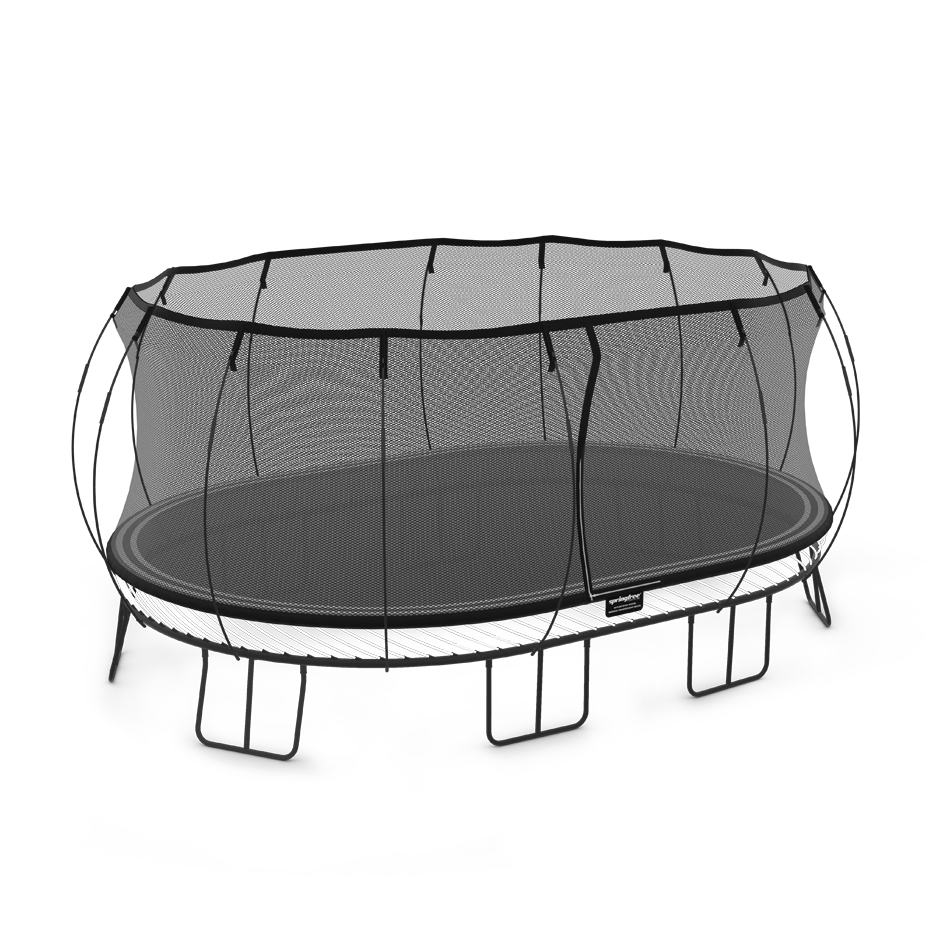
Both spring and springless designs can be safe when they are well built. With spring-based trampolines, full-coverage safety pads should stay flat and secure over the springs and frame. On springless trampoline models, no-gap designs and flexible rods covered by a durable skirt help reduce contact points and create a more cushioned feel during jumping.
Single vs. Multiple Jumpers and Supervision
Many trampoline injuries happen when more than one person is jumping at the same time. Round trampolines tend to pull jumpers toward the center, which can increase collisions, while rectangular trampolines spread people out but allow more height. A simple rule helps most families: one jumper at a time for tricks or higher bouncing, with an adult nearby.
Weight Limits, Age Ranges, and Injury Risk
Always check the posted weight limit for the exact model, since ratings often sit around 200–300 lb but can vary based on size and frame design. Younger kids and toddlers usually do better with a softer center and a secure net, while teens often ask for more height and performance. Matching shape and design to age is part of choosing a safer trampoline by age, along with following the rules listed on the frame tag and manual.
Yard Fit and Placement

A good fit starts with knowing your yard size and how much open space you actually have to work with. When a trampoline fits the yard well, it feels safer, works better for jumping, and blends into everyday outdoor play more easily. It also helps prevent layout issues that can affect neighbors, fences, or walkways.
Footprint, Clearance, and Overhead Space
A round shape spreads out evenly, so plan for clearance on all sides of the trampoline. Rectangles can sit closer to a fence line, which often works better in narrow yards or longer spaces. Always leave clear headroom above the enclosure net, avoid tree branches or roof overhangs, and measure carefully, especially when considering large trampolines for bigger backyards.
Corners, Narrow Yards, and In-Ground Options
Rectangles can tuck neatly into corners while still offering a long and consistent jumping surface. This layout can save space without sacrificing performance for kids and teens. Some families choose in-ground installs to lower the profile and reduce wind movement, but proper drainage is important so water does not collect under the mat.
Noise, Neighbors, and HOA or Local Guidelines
Springs may squeak, enclosure nets can tap poles, and active kids add their own sounds to backyard fun. A light silicone spray on springs and a snug fit on straps and ties can help reduce noise over time. Before setting up, it helps to check local rules about yard placement, fencing, or outdoor play equipment to avoid issues later.
Outdoor Trampoline Durability, Maintenance, and Weather Readiness
Families usually want a durable trampoline that holds up beyond a few seasons of backyard fun. Shape can affect stress points, but material quality and upkeep matter more over the life of the trampoline.
Frame Stress and Shape-Related Wear
Round frames spread weight evenly around the ring, which helps reduce stress at any single point. Rectangular frames place more force on corners and long sides, so welds and joints in those areas work harder. When comparing models, look for thicker steel and strong gussets on rectangular frames, and check that round frames feel sturdy at the leg joints.
Mat, Net, and Hardware Materials to Look For
A UV-stable jumping mat, a strong enclosure net, and galvanized or powder-coated steel help an outdoor trampoline last longer. Tight stitching around the mat and reinforced attachment points support consistent bouncing and reduce wear. In wet or coastal areas, stainless or zinc-plated hardware holds up better, and light rinsing a few times each season can slow corrosion.
Anchoring for Wind and Seasonal Care
Wind can shift any trampoline, regardless of shape or size. Ground anchors or screw-in augers paired with straps help keep the frame in place, especially in open yards. Simple habits like removing the ladder, basketball hoop, or covers before storms and following seasonal trampoline maintenance tips can help protect the net, poles, and frame year-round.
Budget and Value Over Time
Price can vary based on size, shape, materials, and warranty, so it helps to look beyond the upfront number. Thinking about how your family will actually use the trampoline over time makes it easier to choose the right trampoline for your yard and budget.
Here are the main factors that usually affect price and long-term value:
- Shape and build: Round trampolines are often a better value for simple backyard fun and casual jumping. Rectangular trampolines usually cost more because of stronger frames, added springs, and extra bracing.
- Size and safety features: Bigger trampolines, higher weight limits, thicker safety pads, and better enclosure nets can raise the price. These features also add durability and support everyday outdoor play, which is why many families compare top-rated trampolines brands before making a purchase.
- Performance needs: A rectangular shape can be worth the higher price if teens are practicing skills or spending more time jumping for exercise. The more consistent bounce and added control can make backyard practice feel more useful, especially in longer or narrower yards.
- Long-term ownership: Strong frames, quality mats, and sturdy nets tend to hold value better over time. Regular care of the enclosure, pads, and jumping mat helps reduce replacement costs and keeps the trampoline usable for more seasons.
Which Shape Is Right for You?
Here's a quick way to match your family's needs to a shape without overthinking it.
Choose Round If You Want…
- A friendly, center‑pull bounce that feels gentle for kids
- A good price for casual outdoor play
- A circular footprint that blends into a typical backyard
- A forgiving feel for mixed ages, from toddlers (with supervision) to teens
Choose Rectangle If You Want…
- Higher bounce and more control across the full jumping surface
- A better fit for cheer, gymnastics, or trick practice
- A long side that fits a narrow yard or runs along a fence
- More predictable performance at the corners and edges
Quick Size and Yard-Match Guide
Start by measuring your open space and factoring in yard size, clearance, and overhead room before choosing a model.
- Small yards: 8-10 ft round trampolines or compact rectangular models can work with enough side and overhead clearance
- Medium yards: 12-14 ft round trampolines are common for families, while mid-size rectangles allow longer runs for tricks
- Large yards: 15-17 ft rounds or full-size rectangular trampolines give teens and friends more space to jump
No matter the size or shape, adding a safety net enclosure, full-coverage safety pads, and ground anchors helps improve added safety. A ladder makes it easier for younger kids to climb on and off, and some families prefer having their setup handled through professional trampoline installation to avoid placement or assembly issues.
Ready to Pick the Right Trampoline Shape?
If you’re weighing round vs rectangle trampoline options, start with how you plan to use it. A round shape works well for everyday backyard fun with a softer, center-guided bounce, while a rectangular trampoline makes more sense if you want extra height and control for skills or trick practice. Measure your yard, plan for a strong safety net and pads, and choose the shape that fits how you actually jump and play.
When you’re ready to take the next step, you can explore a wide selection of backyard trampolines at Recreations Outlet store near you or order online for home delivery.
Check current trampoline best deals to see which models and sizes fit your space and budget.