






If you’re trying to figure out how to choose a trampoline for your family, start with how it will actually get used. For most homes, that means after-school jumps, weekend fun in the backyard, and maybe a few quiet fitness sessions when kids aren’t around.
This trampoline buying guide walks through size, shape, and safety so you can choose the right trampoline for your yard and family without overthinking it.
1. Start With Your Space and Layout

Before you fall in love with a big model online, take a look at your yard first. A trampoline that fits your space will always feel better than a giant frame squeezed into a corner. You’ll get safer play, fewer issues with neighbors, and fewer surprises on delivery day.
This is where looking at springless backyard trampolines can help, since many designs are made to work with different yard sizes and layouts rather than needing a perfect open field.
Measure the Footprint and Safety Clearances
Grab a tape measure and map out the largest area you can spare. Add at least 3–5 ft of clear space around the trampoline, not counting the mat itself. That buffer gives kids room to get on and off safely and helps with the occasional off-balance jump.
A simple trick is to lay out a garden hose or painter’s tape in the shape you’re considering. This makes it easier to compare round trampolines and square trampolines in the same spot before you decide.
Assess Ground, Slope, and Overhead Hazards
Flat, even ground makes a big difference for stability and long-term use. A mild slope may work with leveling, but steep areas increase risk and wear on the frame. Check above the jumping space for branches or wires, and below for sprinkler heads or roots that could affect in ground or ground trampolines.
Placement: Sun, Shade, and Neighbor Considerations
A bit of shade can keep the mat cooler during summer, while heavy tree cover often means more leaves and faster wear. It helps to place the trampoline where you can see it easily from the house, especially with younger children. In tighter yards, an oval trampoline often offers better space efficiency while still giving kids more usable jumping space.
2. Choose Size and Weight Capacity for Growing Kids
Choosing the right size trampoline starts with who’s jumping today and who will be jumping a year from now. You’re balancing available space, budget, and how your family actually plays. Thinking ahead helps avoid outgrowing a trampoline too quickly.
Size Guide
Most families start by narrowing down size based on yard space, age of the kids, and how much room they want for everyday jumping.
- 8–10 ft: A common choice for younger children or tight yards. Smaller round shape models fit well in compact spaces, though jumping space can feel limited as kids grow.
- 12–13 ft: This range works well for many families. A 12 ft or 13 ft outdoor trampoline offers more room to jump without taking over the backyard. It’s a good fit for single jumpers who want space to move.
- 14–15 ft and up: Best for bigger kids, teens, and parents who may use the trampoline for fitness. More surface area gives jumpers extra room, which can help reduce mistakes near the net.
If you’re deciding on a size trampoline for long-term use, going with a larger trampoline can extend how long it works for your family as kids get taller and more confident. Looking at jumbo trampoline sizes can help when planning for future growth.
Weight Limits: Single Jumper vs. Total Capacity
Most brands list a maximum single-jumper weight, and some also list a total frame capacity. Both matter, especially as kids grow or teens start using the trampoline. Round trampolines typically have lower single-jumper limits than square trampolines, so it’s always worth checking the label.
Planning for Multiple Users and Future Growth
Most trampoline injuries happen when more than 1 person jumps at the same time. A simple house rule of one jumper at a time goes a long way for safety. If kids tend to rotate quickly, a larger jumping area or an elongated shape like an oval can provide more room between turns. When younger kids will soon be sharing with older siblings, sizing up once is often easier than replacing the trampoline later.
3. Which Trampoline Shape Fits Your Family?
Trampoline shapes affect how it feels to jump, where kids tend to land, and how well the trampoline fits into your yard. Each shape offers a different balance of jumping space, bounce, and space efficiency.
Round: Centered Bounce and Family Play

Round trampolines naturally guide jumpers toward the center of the mat, which makes them a common choice for families with younger children. The round shape creates a softer bounce near the edges and works well for casual backyard play. These backyard trampolines also tend to fit easily in many yards and are a popular type for first-time buyers.
Pros:
- Budget-friendly across various sizes
- Softer bounce feel near the edges
- Centers jumpers naturally for safer play
Cons:
- Less edge-to-edge jumping space
- Can feel limiting for older kids
Oval: More Usable Area In Medium Yards

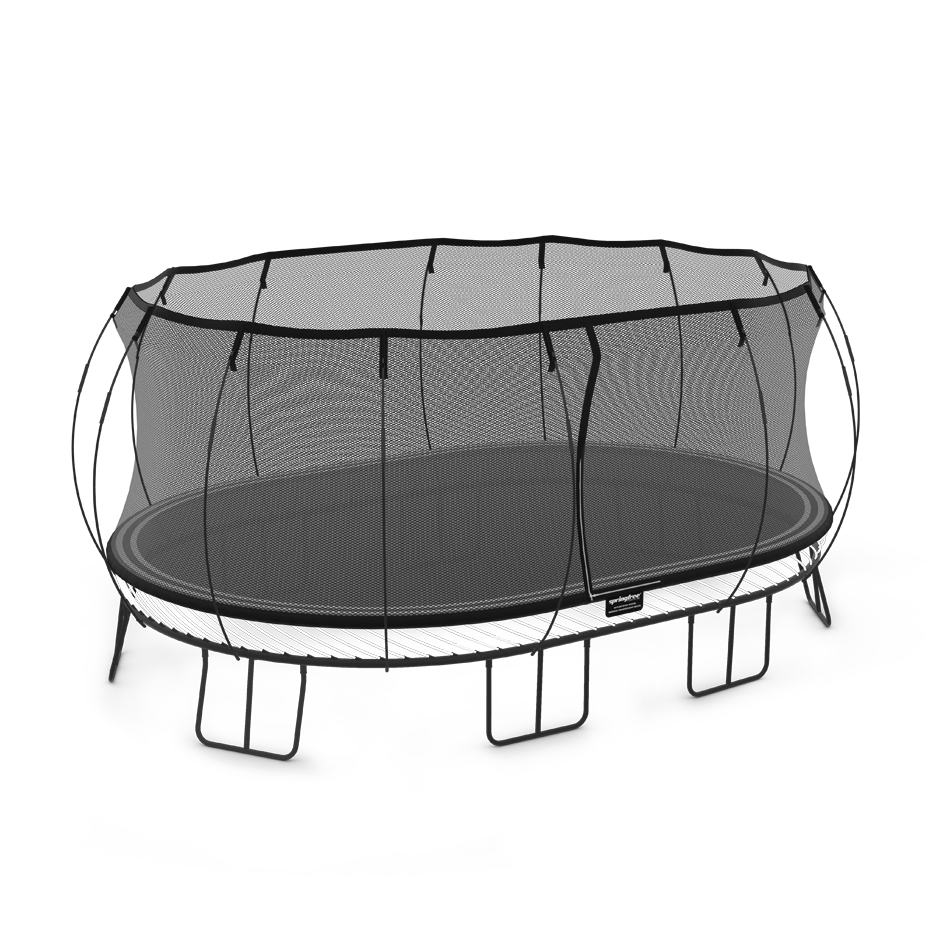
An oval trampoline offers more room front-to-back without taking up as much width as other shapes. The elongated shape increases usable surface area, which helps when kids take turns or when a parent joins for light fitness. Oval trampolines strike a balance between space efficiency and a larger jumping area.
Pros:
- More room lengthwise for play and movement
- Fits medium-sized yards well
- Good balance of bounce and space efficiency
Cons:
- Higher cost than round ones at similar sizes
- Bounce is less uniform than square trampolines
Square: Balanced Bounce and More Usable Space

Square trampolines provide a more uniform bounce across the mat and make better use of the corners. The shape creates a larger jumping area and gives jumpers more control compared to round designs.
Pros:
- More uniform bounce across the mat
- Better use of corners for more jumping space
- Feels stable for confident jumpers
Cons:
- Takes up more room in the yard
- Typically costs more than round models
If long-term quality matters to your family, comparing trampoline warranties can help you see how square or rectangle trampoline frames are built to hold up over time.
4. Safety Features That Make Difference

Good trampoline safety starts with smart design and simple habits at home. When the frame, mat, and enclosure work together, today’s trampolines do a better job reducing common risks while still keeping play fun for kids and families. This is also where designs like Springfree trampolines stand out, since safety features are built into the structure rather than added on later.
Enclosure Nets: Design, Height, and Door Style
An enclosure net plays a big role in keeping jumpers on the mat. Look for designs where the net connects inside the jumping area so kids can’t reach springs or the frame. A taller net gives confident jumpers more room, and whether it uses a zipper or overlap opening, the main thing is that it closes easily every time.
Springs, Padding, or Springless Designs
Traditional trampolines use springs and thick padding to protect hands and feet from pinch points. Springless designs take a different approach by moving the flex system below the mat and keeping hard parts away from the jumping space. This style, often seen in springless backyard trampolines, reduces contact with metal parts while still delivering a smooth bounce when the mat and net are properly maintained.
Frame Stability, Anchors, and Ground Clearance
A solid frame with wide legs helps keep the trampoline steady during use. In windy areas, anchors add extra security and lower the risk of shifting. Leaving enough ground clearance under the mat also helps prevent contact with grass, soil, or buried sprinkler lines during higher jumps.
Rules and Standards: One-At-A-Time and Clear Zones
Even with strong safety features, rules still matter. Limiting play to 1 jumper at a time greatly lowers the risk of injuries, especially for younger children. Keep bikes, furniture, and toys out of the clear zone, and consider basic trampoline accessories for safety and play like anchors or ladders that support safe entry and exit.
5. Build Quality, Weather Durability, and Maintenance
Backyard trampolines stay outside through sun, rain, and cold, so materials matter. Paying attention to build quality early helps prevent saggy mats, worn nets, and rusted frames over time.
Frame Materials and Coatings for Rust Resistance
A strong frame starts with heavy-gauge steel and protective coatings that handle moisture. Galvanized or powder-coated parts reduce rust and help outdoor trampolines hold up longer. In coastal or humid areas, extra rinsing and basic care can make a noticeable difference.
Mat and Net: UV Resistance and Stitching Quality
The mat takes constant use from jumping, sunlight, and weather. UV-resistant materials and strong stitching help the mat keep its shape so the bounce stays consistent. Nets benefit from UV protection too, and letting the mat and enclosure net dry after water play can slow early wear.
Springs, Connectors, and Replaceable Parts
Springs and connectors naturally stretch with regular use. Choosing a brand that offers replacement parts, including springs, pads, nets, and hardware, helps extend the life of the trampoline. This is one reason many families look for quality brands that support long-term maintenance.
Year-Round Use: Covers, Snow Load, and Storage
In winter, brushing off snow keeps extra weight from sitting on the mat. A simple cover helps protect against leaves and UV when the trampoline isn’t in use. Following seasonal trampoline safety checks makes it easier to spot wear early and keep the trampoline ready for safe use year-round.
6. Budget and Warranty: Getting Value That Lasts
When buying a trampoline, it helps to think beyond the price tag. A model that holds up over years of use often brings better value than the cheapest option that looks big on day one.
Price Tiers vs. Longevity and Repairability
Entry-level trampolines can work well for younger children and lighter play. Mid-range options usually add better enclosure nets, thicker padding, and stronger frames, while higher-end outdoor trampoline models focus on durability and consistent bounce. The ability to replace mats, nets, and springs matters more over time than flashy extras, which is why some families also factor in accessories that improve trampoline safety as part of the overall setup.
Warranty Terms, Part Availability, and Support
It’s smart to compare warranties for the frame, mat, springs, and net separately. A long frame warranty is helpful, but easy access to replacement parts often matters more in real life. Brands like Skywalker trampolines and others typically list part numbers online, which makes replacing a pad or net much easier a year or two down the line.
Total Cost of Ownership: Delivery, Setup, and Insurance
Beyond the trampoline itself, plan for delivery, anchors, ladders, and any professional installation setup you might need. In windy yards, tie-downs are often worth the added cost. Some insurance policies ask about trampolines, so a quick check can prevent issues later, and spending a bit more upfront on quality parts can reduce costs over time.
Ready To Choose The Trampoline That Fits Your Family?
Once you’ve worked through space, size, shape, and safety, choosing a trampoline becomes much simpler. From there, it often comes down to personal preference. Do square trampolines feel like the right fit, or does an oval work better for your yard?
If you are still deciding between sizes or shapes, comparing models side by side can help clarify what works best. You can also visit a Recreations Outlet store in Cincinnati or Columbus to see trampoline options in person, with delivery and installation available across Ohio, Kentucky, and Indiana, or order online when you are ready.